
The best way to store kayaks: smart solutions for protection and space
Finding the ideal kayak storage method truly makes a difference, not just in saving precious space but also in preserving equipment for years of adventure. Whether storing a recreational sit-on-top or a long touring craft, adopting the right techniques helps prevent warping, fading, and unexpected damage. There is more than one route to reliable kayak care—let us explore practical ideas that keep every paddling season within easy reach.
Why proper kayak storage matters
Every kayak owner faces the challenge of keeping their watercraft safe, accessible, and out of harm’s way between trips. Weather conditions, cramped garage corners, or an overcrowded backyard all take a toll over time. Without attention to detail, hull shapes might warp, sun exposure could cause fading, or critters may find new homes inside cockpit areas. Starting with the right methods often leads to fewer repairs and smoother adventures ahead.
Kayak storage is about more than convenience—it plays a big role in maintaining on-water performance. Environmental factors such as moisture and extreme temperatures increase the risk of material degradation. Opting for off the ground storage and avoiding direct ground contact shields boats from these hazards, making every outing safer and more enjoyable.
Exploring popular kayak storage methods
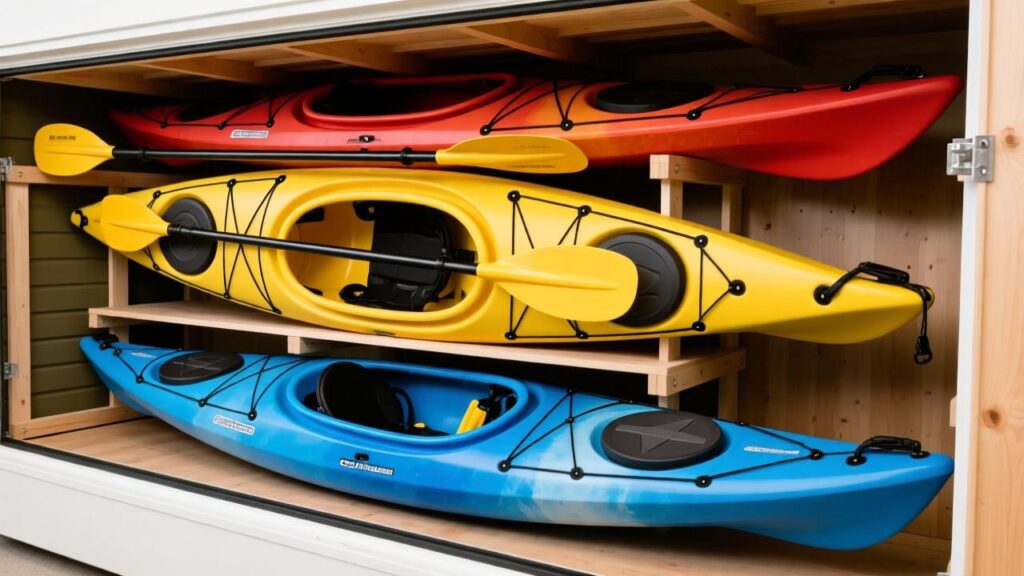
Several approaches can help tuck away a kayak securely at home or elsewhere. Each method suits different spaces, lifestyles, and boat types. The following sections examine leading options to match various needs.
What are the advantages of wall-mounted racks?
Wall-mounted racks remain a favorite choice for efficient storage when floor or ceiling space is limited. Utilizing vertical surfaces along a garage or shed frees up walkable area while safeguarding boats above daily clutter. Many paddlers rely on secure straps or padded arms designed to let kayaks rest gently without pressure points that might cause dents or bending. When installed correctly, even weight distribution becomes straightforward, reducing stress on both the boat and its mounting hardware.
Mounting a kayak on its side works especially well with this style, particularly for composite or plastic models. This position respects the hull’s natural contours and limits deformation along flat surfaces. Some owners rotate between upside down storage and on its side throughout longer periods, minimizing the risk of hidden weak spots or distortion.
How do ceiling storage systems and hoists help maximize space?
For those with limited wall area or low-traffic garages, suspending kayaks overhead using ceiling storage or hoists offers valuable square footage below. These systems typically involve strong webbing, secure hangers, or pulley setups attached to overhead beams. Such mechanisms keep vessels elevated, far from pests and flooding, while bringing newfound order to once-chaotic zones.
Properly balanced suspension—either parallel to the ceiling or slightly angled—ensures even weight distribution across the haulage system. Supporting straps should hug the widest parts of the hull, steering clear of delicate ends or hard chines. Secure straps stop unforeseen swings or accidents, allowing quick access whenever the call of open water returns.
What makes freestanding racks a flexible option?
Those lacking solid walls or exposed rafters often turn to freestanding racks. Portable yet sturdy, these frames accommodate multiple kayaks and adapt to diverse room layouts. Placing kayaks in cradles lined with soft foam provides vital support, letting gravity settle evenly along the hull rather than concentrating force at single points.
Freestanding units enable owners to use shaded outdoor locations or move storage indoors before winter sets in. Several designs allow for stacking boats vertically or side-by-side, catering to growing fleets. With no installation required and no impact on property structures, flexibility meets peace of mind.
Key considerations for optimal kayak protection
No matter which primary storage approach fits best, a few golden rules ensure kayaks remain adventure-ready through every season. Incorporating thoughtful accessories and regular inspections pays off in extended gear lifespan and worry-free outings.
How do covers and shielding play a part?
Exposure quickly takes its toll, especially under direct sunlight or unpredictable weather. Lightweight, breathable covers ward off damaging UV rays, pollen, bird droppings, and dust. For extended outdoor or leaky shed storage, waterproof covers shield against heavy rain and snow.
Choosing protective options designed for airflow prevents moisture from building up inside cockpits or hatches. Trapped dampness can lead to mold growth or foul odors, so a cover that combines water resistance with breathability is essential.
Why emphasize off the ground storage and secure positioning?
Leaving kayaks directly on turf, gravel, or concrete may seem convenient but introduces unnecessary risks. Wet terrain, freezing puddles, and burrowing rodents can degrade hulls and interiors. Opting for off the ground storage eliminates direct ground contact, ensuring better drainage and fewer scratches.
It is important to check that support points—whether bars, slings, or racks—are padded and form-fitting. Tightening straps just enough to stabilize the kayak prevents accidental slides or warping, but too much tension could create indentations. Changing boat positions occasionally spreads stress across wide surfaces, extending longevity.
- Store kayaks upside down or on their side for balanced support
- Avoid prolonged direct ground contact
- Utilize breathable and weatherproof covers outdoors
- Inspect racks and straps regularly for wear
- Ensure weight is distributed evenly along hull curves
Frequently asked questions about kayak storage
Which direction should a kayak face when stored—upside down or on its side?
Most experts recommend storing kayaks either upside down (deck facing ground) using bar-style racks or on their side in padded cradles. Storing upside down protects the hull and maintains structural integrity, while side storage naturally aligns with the shape of most kayaks. Both methods prevent distortion and offer easy access.
- Upside down storage: reduces direct sun and rain exposure on cockpit area
- On its side: easy to combine with adjustable wall mounts
Are there special precautions for outdoor kayak storage?
Outdoor kayak storage requires extra diligence. Using protective, waterproof covers shields gear from the elements and airborne debris. Placing kayaks on racks, benches, or suspended slings ensures off the ground storage and avoids contact with mud or standing water.
- Choose shaded spots when possible to minimize UV exposure
- Allow air flow by picking breathable cover materials
How can weight be evenly distributed during prolonged storage?
Ensuring even weight distribution prevents dents and flattening, especially over longer periods. Racks that cradle the hull at two widely spaced points or use supportive webbing are most effective. Avoid sharp hooks or single-point hangers, which can cause local damage.
| Method | Support type |
|---|---|
| Wall-mounted rack | Padded arms, horizontal spacing |
| Ceiling hoist | Wide straps under hull |
| Freestanding rack | Foam or sling cradles |
What safety steps help prevent kayak theft or accidental falls?
Locking kayaks with cables or chains deters theft, especially outside. Use secure straps or hangers to fasten kayaks firmly to racks or structures. Periodically inspect all mounting hardware and replace worn components to avoid sudden drops or loosening.
- Use locking systems for extra security outdoors
- Tighten straps during seasonal changes
- Check beam or wall condition for anchoring racks